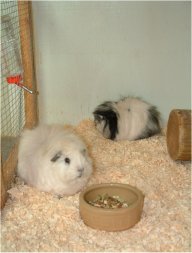
As we said at the very beginning you must be committed to providing the very best for your guinea pig. It is amazing how many people dont think its necessary to interact with their guinea pigs once they bring them home. But it is, and it is something you need to consider BEFORE you buy your pet. Lets see what guinea pigs need.
HOUSING
In the wild guinea pigs live in caves and burrows, spending the majority of time foraging for food. Their hutch can be placed indoors or out as long as they are sheltered from the elements, extreme weather and are safe from harrasment from other animals. The garage is never a safe place to keep the cage because the car fumes can be fatal.
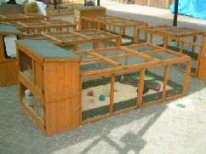
Guinea pigs need good, secure, roomy housing. Many suitable pre-made hutches, runs and cages are not cheap but they are perfect for your pet. Or you might know someone who could make one for you. Remember that guinea pigs will gnaw on wood, so make sure that any wooden hutch is treated with non-toxic products.
A good hutch will be large and have at least two compartments one for the day and one to nest and hide in at night. Dont forget that if you have more than one guinea pig you will need a bigger hutch. They prefer to sleep separately at night, too, so need their own nesting areas. Would you want to share your bedroom all the time?
The minimum size for a good hutch is 3ft wide x 2ft deep x 18in high (91cm x 61cm x 45cm),
It should be around 4-5 times the length of the guinea pig when the it is stretched out. This will need to be much larger if you are keeping more than one guinea pig.
Remember that a hutch can NEVER be too big buy or make the largest hutch you can manage.
The hutch should be placed in a position that is sheltered, out of direct sunlight. Extremes of temperature can cause stress which may result in discomfort or illness or death.
You must also provide a run for your guinea pig that allows him plenty of room to exercise. Guinea pigs are naturally frightened of large, open spaces but love playing in a run that contains playthings, such as boxes, flowerpots, drainpipes and logs.
Hutch Hygiene
Hutches should be cleaned out on a regular basis. This is especially important in warmer weather in order to prevent flies being attracted to the hutch, as this may result in an infestation of maggots. In the wetter months, bedding can become damp and moldy from extreme weather.
Did you know that guinea pigs can catch nasty diseases from dirty hutches? So make sure you pay lots of attention to keeping your guinea pigs hutch clean and hygienic. Here are some tips to help you:
Every day
Check your pig's food. Remove any uneaten portion and throw away. Clean the bowl.
Refill with fresh food, adjusting the portion to ensure all the food will be eaten.
Provide Fresh water. Make sure the water container is not leaking in to the cage and dampening the bedding.
Remove any soiled/wet bedding
Once a week
Remove all bedding. Thoroughly sweep out all the cage. Rinse with warm water and mild detergent and wait until dry. Spray inside of hutch with a guinea pig safe disinfectant/deoderant and wait until dry. Replace with clean, dry bedding.
BEDDING MATERIAL
Keeping your guinea pig warm and cozy is very important. It is a good idea to use very absorbant bedding. This will help keep the odor down and make cleaning easier on you.
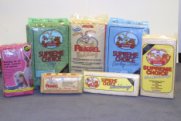
Carefresh - Supreme Science
This is a top of the line bedding made from virgin wood pulp fibers. A great alternative to traditional bedding. It is more absorbent than wodd shavings and really helps eliminate pet odors. It is an environmentally friendly product, contains no inks or dyes, is dust free, hypo-allergenic and is, therefore, particularly suitable if your guinea pig. Carefresh is both safe and hygenic, has been heat treated to inhibit bacterial and fungal growth. It absorbs up to 3 times its weight in liquid and lasts up to twice as long as traditional bedding.
EXERCISE
It is extremely important that your guinea pig has the opportunity to exercise every day. Even house guinea pigs require fresh air, daylight and grass. Exercise is essential to:
HOUSING
In the wild guinea pigs live in caves and burrows, spending the majority of time foraging for food. Their hutch can be placed indoors or out as long as they are sheltered from the elements, extreme weather and are safe from harrasment from other animals. The garage is never a safe place to keep the cage because the car fumes can be fatal.
Guinea pigs need good, secure, roomy housing. Many suitable pre-made hutches, runs and cages are not cheap but they are perfect for your pet. Or you might know someone who could make one for you. Remember that guinea pigs will gnaw on wood, so make sure that any wooden hutch is treated with non-toxic products.
A good hutch will be large and have at least two compartments one for the day and one to nest and hide in at night. Dont forget that if you have more than one guinea pig you will need a bigger hutch. They prefer to sleep separately at night, too, so need their own nesting areas. Would you want to share your bedroom all the time?
The minimum size for a good hutch is 3ft wide x 2ft deep x 18in high (91cm x 61cm x 45cm),
It should be around 4-5 times the length of the guinea pig when the it is stretched out. This will need to be much larger if you are keeping more than one guinea pig.
Remember that a hutch can NEVER be too big buy or make the largest hutch you can manage.
The hutch should be placed in a position that is sheltered, out of direct sunlight. Extremes of temperature can cause stress which may result in discomfort or illness or death.
You must also provide a run for your guinea pig that allows him plenty of room to exercise. Guinea pigs are naturally frightened of large, open spaces but love playing in a run that contains playthings, such as boxes, flowerpots, drainpipes and logs.
Hutch Hygiene
Hutches should be cleaned out on a regular basis. This is especially important in warmer weather in order to prevent flies being attracted to the hutch, as this may result in an infestation of maggots. In the wetter months, bedding can become damp and moldy from extreme weather.
Did you know that guinea pigs can catch nasty diseases from dirty hutches? So make sure you pay lots of attention to keeping your guinea pigs hutch clean and hygienic. Here are some tips to help you:
Every day
Check your pig's food. Remove any uneaten portion and throw away. Clean the bowl.
Refill with fresh food, adjusting the portion to ensure all the food will be eaten.
Provide Fresh water. Make sure the water container is not leaking in to the cage and dampening the bedding.
Remove any soiled/wet bedding
Once a week
Remove all bedding. Thoroughly sweep out all the cage. Rinse with warm water and mild detergent and wait until dry. Spray inside of hutch with a guinea pig safe disinfectant/deoderant and wait until dry. Replace with clean, dry bedding.
BEDDING MATERIAL
Keeping your guinea pig warm and cozy is very important. It is a good idea to use very absorbant bedding. This will help keep the odor down and make cleaning easier on you.
Carefresh - Supreme Science
This is a top of the line bedding made from virgin wood pulp fibers. A great alternative to traditional bedding. It is more absorbent than wodd shavings and really helps eliminate pet odors. It is an environmentally friendly product, contains no inks or dyes, is dust free, hypo-allergenic and is, therefore, particularly suitable if your guinea pig. Carefresh is both safe and hygenic, has been heat treated to inhibit bacterial and fungal growth. It absorbs up to 3 times its weight in liquid and lasts up to twice as long as traditional bedding.
EXERCISE
It is extremely important that your guinea pig has the opportunity to exercise every day. Even house guinea pigs require fresh air, daylight and grass. Exercise is essential to:
1. maintain high levels of fitness
2. maintain mental well-being
3. increase cardiovascular fitness
4. control weight levels
5. maintain joint mobility
6. maintain muscle tone
2. maintain mental well-being
3. increase cardiovascular fitness
4. control weight levels
5. maintain joint mobility
6. maintain muscle tone
Your Guinea Pig will love to come out and run around in a pet safe room or exercise run. It's a lot of fun to watch them darting around and playing, jumping and sqeaking from pure enjoyment.
You need to provide a large, secure run for this daily exercise. It can be free-standing or attached to the hutch. Security and position are extremely important to avoid any harm or stress to your pet during his playtime. A pet safe room works just as well as long as there is nothing dangerous for them to chew on or otherwise injure themselves. Make cerain they can not get to any dangerous plants or chew on electrical cords. One thing to remember is that guinea pigs are not as easy to litter box train so if you give them run of an indoor room they may make a slight mess.
some guinea pigs will let you take them for a walk with a harness. Always try this at home first to be sure the harness fits properly and your pet can not wriggle out of it. Even then it is best to stay in a safe and secure area.
Their natural instincts are to forage, explore and socialize. It only takes a short time to put together an exciting playground for your pet that will keep him happy for years.
You need to provide a large, secure run for this daily exercise. It can be free-standing or attached to the hutch. Security and position are extremely important to avoid any harm or stress to your pet during his playtime. A pet safe room works just as well as long as there is nothing dangerous for them to chew on or otherwise injure themselves. Make cerain they can not get to any dangerous plants or chew on electrical cords. One thing to remember is that guinea pigs are not as easy to litter box train so if you give them run of an indoor room they may make a slight mess.
some guinea pigs will let you take them for a walk with a harness. Always try this at home first to be sure the harness fits properly and your pet can not wriggle out of it. Even then it is best to stay in a safe and secure area.
Their natural instincts are to forage, explore and socialize. It only takes a short time to put together an exciting playground for your pet that will keep him happy for years.
Guinea Pigs explore around the edge and hiding places first, rather than the middle of the area or run. Place objects like tubes, tunnels, untreated wicker baskets and boxes in the run for them to play with. They also like to look under, hide in, cardboard boxes, wicker baskets and flowerpots. Large plastic pipes make great hiding places and excellent tunnels. Change the items around occasionally to provide added interest for your Guinea pig.
Guinea Pigs enjoy running around or chewing on logs. provide them with some natural wood willow, beech, hazel or apple, for them to explore and gnaw. This is a good way to help keep their teeth trim!
Feeding time for a domestic animal is often over in minutes whereas, in the wild, feeding takes most of the day as they forage for their favorite foods. By hiding food and the occasional treat under cardboard boxes, in empty plant or yoghurt containers, or in different areas of the animals hutch, your guinea pig will be forced to hunt for his food this will keep him occupied for many happy hours and prevent boredom. Guinea Pigs LOVE companionship and his best friend should be you!
Guinea Pigs enjoy running around or chewing on logs. provide them with some natural wood willow, beech, hazel or apple, for them to explore and gnaw. This is a good way to help keep their teeth trim!
Feeding time for a domestic animal is often over in minutes whereas, in the wild, feeding takes most of the day as they forage for their favorite foods. By hiding food and the occasional treat under cardboard boxes, in empty plant or yoghurt containers, or in different areas of the animals hutch, your guinea pig will be forced to hunt for his food this will keep him occupied for many happy hours and prevent boredom. Guinea Pigs LOVE companionship and his best friend should be you!
HANDLING YOUR GUINEA PIG
To ensure that your guinea pig becomes tame and affectionate it is important that you handle it frequently and correctly. Picking up a guinea pig incorrectly could lead to him being permanently frightened and may lead to him becoming aggressive.
Remember that most small animals are prey in the wild. So, if they are approached from above they will see a large shadow and become scared. They might run and hide or try to attack you.
The best way to pick up your guinea pig is to talk to him as you approach him - on the same level. Crouch in front of him and let him come to you, presenting the back of your hand for him to sniff. place one hand flat in front of him and with the other gently scoop him towards you. Be sure to support his weight one hand while bringing the other over the top of him to make sure that if he begins to wriggle he will not fall. Place him on your lap or hold him to your chest and very slowly stand up. Always talk to your guinea pig to calm and reassure him. A small treat once he is out will make him happy as well.
Grooming and health checks
Grooming your guinea pig is necessary, especially in the long haired varieties, to avoid matting and maintain a healthy shiny coat. It also helps to build a relationship with your pet. While grooming it is the perfect opportunity for you to examine your pet closely to look for any signs of illness. (See the next section called Is my guinea pig well? for more details on signs of illness and behavior.)
Check the whole animal, looking for any discharges, sore areas, scabs, soiling, etc. that may indicate a problem. It is especially important to check the teeth regularly as they grow all the time and may require veterinary attention if they become overgrown. To help prevent this, feed Gerty Guinea Pig food as it has plenty of ingredients for the animal to chew on which will help wear down his teeth. Also be sure he has plenty of safe things to gnaw on.
COMPANIONSHIP
We touched briefly on pairing guinea pigs at the beginning, but it needs explaining in more detail.
Guinea pigs in the wild live in large colonies with a well-structured social groups. This is the opposite with domesticated guinea pigs where they are often kept in solitude. There should be no problems keeping two pigs together together if the following rules are followed.
First, you must have a hutch which is large enough to accommodate more than one guinea pig. Most females will live together in groups from to two and up. A single male will get along fine with one femal or with in a group of females but you will have lots of babies. males prefer to live in pairs and it is best to get two littermates or at least have them together from a very young age. Another option is to maintain two seperate cages next to each other so they can still socialize but not squabble or breed.
It is not recommended to pair a Guinea Pig with a rabbit, as rabbits are naturally dominant and may try to bully the guinea pig or, even worse, attack them.
Veterinary treatment
A guinea pig is inexpensive to buy, but you must be prepared to pay for veterinary treatment if he becomes ill.
Gestation and lactation
If you do decide to breed your female, you will need to give her twice as much food as normal whilse she is pregnant, as the demand for nutrients during this time is much greater. Once she has had the litter she will need three times as much food as normal while she is lactating (feeding her babies herself). The piglettes are born fully formed and furry with their eyes open. Avoid touching them for the first few days just to let them become accustomed to their new environment.
Older Guinea Pigs
When guinea pigs reach the senior stage of life, it is equally important to consider changes in their environment and diet. Older animals tend to be less active and will have lower energy requirements. Make sure that you feed the correct amount of Gerty Guinea pig food for their actual body weight and activity level.
Encourage them to exercise daily to maintain as high a level of fitness as possible. This will also help them fight off disease.
As weve said, you should check all your guinea pigs regularly for signs of illness or disease, but older guinea pigs may require daily help with grooming as well this can be an enjoyable experience for both of you.
VACATIONS
If you want to go on vacation, you must ensure that someone is happy to look after your pet properly while you are away, or you must be prepared to pay for them to be boarded in an appropriate facility.
To ensure that your guinea pig becomes tame and affectionate it is important that you handle it frequently and correctly. Picking up a guinea pig incorrectly could lead to him being permanently frightened and may lead to him becoming aggressive.
Remember that most small animals are prey in the wild. So, if they are approached from above they will see a large shadow and become scared. They might run and hide or try to attack you.
The best way to pick up your guinea pig is to talk to him as you approach him - on the same level. Crouch in front of him and let him come to you, presenting the back of your hand for him to sniff. place one hand flat in front of him and with the other gently scoop him towards you. Be sure to support his weight one hand while bringing the other over the top of him to make sure that if he begins to wriggle he will not fall. Place him on your lap or hold him to your chest and very slowly stand up. Always talk to your guinea pig to calm and reassure him. A small treat once he is out will make him happy as well.
Grooming and health checks
Grooming your guinea pig is necessary, especially in the long haired varieties, to avoid matting and maintain a healthy shiny coat. It also helps to build a relationship with your pet. While grooming it is the perfect opportunity for you to examine your pet closely to look for any signs of illness. (See the next section called Is my guinea pig well? for more details on signs of illness and behavior.)
Check the whole animal, looking for any discharges, sore areas, scabs, soiling, etc. that may indicate a problem. It is especially important to check the teeth regularly as they grow all the time and may require veterinary attention if they become overgrown. To help prevent this, feed Gerty Guinea Pig food as it has plenty of ingredients for the animal to chew on which will help wear down his teeth. Also be sure he has plenty of safe things to gnaw on.
COMPANIONSHIP
We touched briefly on pairing guinea pigs at the beginning, but it needs explaining in more detail.
Guinea pigs in the wild live in large colonies with a well-structured social groups. This is the opposite with domesticated guinea pigs where they are often kept in solitude. There should be no problems keeping two pigs together together if the following rules are followed.
First, you must have a hutch which is large enough to accommodate more than one guinea pig. Most females will live together in groups from to two and up. A single male will get along fine with one femal or with in a group of females but you will have lots of babies. males prefer to live in pairs and it is best to get two littermates or at least have them together from a very young age. Another option is to maintain two seperate cages next to each other so they can still socialize but not squabble or breed.
It is not recommended to pair a Guinea Pig with a rabbit, as rabbits are naturally dominant and may try to bully the guinea pig or, even worse, attack them.
Veterinary treatment
A guinea pig is inexpensive to buy, but you must be prepared to pay for veterinary treatment if he becomes ill.
Gestation and lactation
If you do decide to breed your female, you will need to give her twice as much food as normal whilse she is pregnant, as the demand for nutrients during this time is much greater. Once she has had the litter she will need three times as much food as normal while she is lactating (feeding her babies herself). The piglettes are born fully formed and furry with their eyes open. Avoid touching them for the first few days just to let them become accustomed to their new environment.
Older Guinea Pigs
When guinea pigs reach the senior stage of life, it is equally important to consider changes in their environment and diet. Older animals tend to be less active and will have lower energy requirements. Make sure that you feed the correct amount of Gerty Guinea pig food for their actual body weight and activity level.
Encourage them to exercise daily to maintain as high a level of fitness as possible. This will also help them fight off disease.
As weve said, you should check all your guinea pigs regularly for signs of illness or disease, but older guinea pigs may require daily help with grooming as well this can be an enjoyable experience for both of you.
VACATIONS
If you want to go on vacation, you must ensure that someone is happy to look after your pet properly while you are away, or you must be prepared to pay for them to be boarded in an appropriate facility.